Highland Park vs Northwest Hills: Choosing Your Fit
June 4, 2026
June 4, 2026
If you are deciding between Highland Park West/Balcones and Northwest Hills, you are not choosing between a “good” neighborhood and a “better” one. You are choosing between two distinct versions of Northwest Austin living, each with its own rhythm, housing mix, and day-to-day feel. The right fit depends on how much you value central access, home style, price range, and neighborhood scale. Let’s dive in.
Before you compare home prices or lot sizes, it helps to define what each area actually includes. Highland Park West and Balcones are generally framed as the smaller inner-loop pocket bounded by RM 2222, 35th Street, Mt. Bonnell Road, MoPac, and Bull Creek Road. The Highland Park West Balcones Area Neighborhood Association says that footprint includes about 1,800 residences.
Northwest Hills is usually defined more broadly. The Northwest Austin Civic Association describes its area as running between RM 2222, Loop 360, US 183, and MoPac, with more than 6,200 single-family households and more than 5,000 apartments. In simple terms, Highland Park West/Balcones feels more compact and tucked in, while Northwest Hills covers a much larger and more varied corridor.
That distinction matters. If you are browsing listings, you may see different boundaries used by neighborhood groups, city documents, and home search platforms. In Balcones especially, subdivision labels can vary, so it is smart to confirm the exact section or street before making a side-by-side comparison.
Highland Park West and Balcones sit in a scenic part of Central Austin with a strong connection to hills, views, and established residential streets. The area is known for its smaller footprint and closer-in feel, which can appeal if you want easier access to central Austin destinations.
According to HPWBANA, the neighborhood is about 15 minutes from Austin City Center and includes four parks, nearby access to Mount Bonnell and Bright Leaf Preserve, and a business district with more than 100 businesses. That combination gives the area a blend of natural scenery and practical convenience without feeling overly spread out.
From a housing perspective, City of Austin data lists Highland Park West homes at a typical size of 2,400 square feet, with much of the housing stock dating from the late 1940s through the early 1950s. Public neighborhood guides often describe the area as having many mid-century homes, remodels, and some view-oriented properties on larger lots.
Northwest Hills offers a broader version of Northwest Austin living. Because the area is much larger, it tends to include more variation in home styles, lot sizes, and everyday commercial pockets. If you want more options within one general area, Northwest Hills often gives you a wider range to explore.
City of Austin housing data lists Northwest Hills homes at a typical size of 2,575 square feet, with much of the housing stock dating from the 1960s and 1970s. That suggests homes here tend to be slightly newer and a bit larger on average than in Highland Park West.
Daily convenience is a big part of the Northwest Hills appeal. The area includes service nodes along Far West Boulevard, Mesa Drive, Hart Lane, and nearby Northland addresses, and the City of Austin operates Northwest Recreation Center on Northland Drive. The larger footprint also means you may find a neighborhood rhythm that feels more service-oriented from day to day.
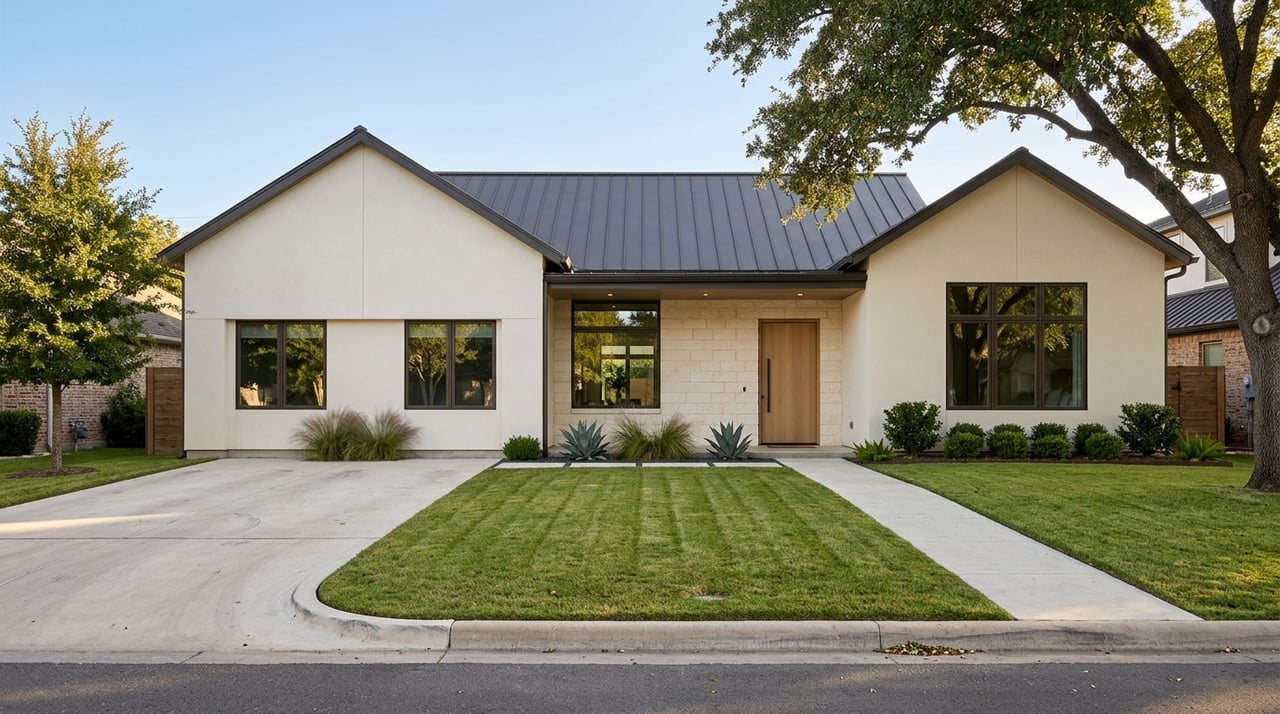
If you are drawn to established homes with character, mature trees, and the possibility of views, Highland Park West/Balcones may stand out. The area is often associated with ranch-style homes, mid-century architecture, remodels, and some custom properties, especially on the Balcones side.
City survey data also suggests Balcones Drive and Environs includes a higher-end custom-home segment. That does not mean every property is custom or luxury, but it does support the idea that parts of Balcones can offer a more premium feel.
Neighborhood guides commonly describe Highland Park West lots in the range of about 0.2 to 0.75 acres, with a median around 0.363 acres. Those figures are approximations rather than exact lot measurements, but they are useful for understanding the general pattern.
Northwest Hills generally offers a broader mix. You may see original ranch-era homes, updated properties, and custom rebuilds, depending on the section. Because the area is larger, your options can vary more from street to street.
Public neighborhood guides often frame Northwest Hills lot sizes in the range of roughly 0.25 to 0.5 acres. Again, these are broad neighborhood approximations, not parcel-specific numbers, but they help show that both areas can offer generous lots compared with many other Austin neighborhoods.
If your goal is flexibility, Northwest Hills may be the easier place to cast a wider net. If your goal is a more tucked-away setting with a stronger view-home reputation, Highland Park West/Balcones may feel more targeted.
Current market snapshots point to a meaningful pricing gap, though the numbers should be viewed as directional because platform boundaries may not match neighborhood association maps exactly. Redfin reports a median sale price of about $1.4 million in Highland Park West and about $758,000 in Northwest Hills.
That difference supports a practical takeaway. Highland Park West/Balcones often fits buyers looking for a closer-in location, a more premium price tier, and homes with view potential or a more custom feel. Northwest Hills may appeal if you want more price flexibility and a lower current entry point within a well-established Northwest Austin area.
Of course, individual homes can vary widely based on updates, lot position, topography, and exact micro-location. In both neighborhoods, the specific block can matter almost as much as the neighborhood name.
If central access matters to you, Highland Park West/Balcones has an edge in location. HPWBANA notes that MoPac runs through the eastern portion of the area, and the neighborhood is within about 15 minutes of Austin City Center. That makes it a practical option for trips into downtown, UT, and other central Austin destinations.
For many buyers, that closer-in feel is one of the area’s biggest strengths. You get hill-country scenery without feeling far removed from the urban core.
Northwest Hills benefits from multiple arterial routes, including RM 2222, Loop 360, US 183, and MoPac. That can be helpful if your routine takes you in different directions, but it also means commute experience can vary quite a bit depending on your exact street.
Transit options are also worth noting. CapMetro’s 980 North MoPac Express provides commuter service into Central Austin using the MoPac Express Lanes, and the 661 Far West/UT route serves parts of the northwest corridor, including Woodhollow, North Hills, Hart, and Greystone. Great Hills Park & Ride adds another option for some northwest commuters.
The feel here is often more scenic and compact. With access to outdoor landmarks such as Mount Bonnell, Mayfield Park & Preserve, Covert Park, and Bright Leaf Preserve, the area offers a strong connection to nature and topography.
That does not mean daily errands are difficult. HPWBANA notes a business district with more than 100 businesses, so you still have neighborhood-serving conveniences nearby. The overall experience is less about being remote and more about being centrally located in a smaller, hillier pocket.
Northwest Hills tends to feel broader and more convenience-driven. Because the area is larger and includes more service clusters, some buyers find the day-to-day routine easier to organize within the neighborhood itself.
This is also a place where internal variety matters. One part of Northwest Hills may feel quiet and residential, while another is closer to commercial services, recreation, or commuter routes. That range is part of the neighborhood’s appeal, especially if you want options.
If you are trying to narrow your search, this simple framework can help.
The right answer often comes down to your priorities, not the neighborhood’s reputation. If you want a more intimate hills pocket with stronger central access, Highland Park West/Balcones may feel like home. If you want more variety, convenience, and room to compare options, Northwest Hills may be the better match.
Buying in either area benefits from block-by-block guidance. Street position, topography, updates, and even how a specific listing is classified can shape value in ways that broad neighborhood averages do not fully capture.
If you want help comparing specific streets, home styles, or pricing in these Austin neighborhoods, the Ruth & Evonne Team can help you evaluate the tradeoffs and find the fit that matches your goals.
Stay up to date on the latest real estate trends.
July 23, 2026
July 16, 2026
July 9, 2026
July 2, 2026
June 25, 2026
June 18, 2026
June 11, 2026
June 4, 2026
May 28, 2026